A branded mini-game is a short browser game that opens from a link and wears your brand. It helps when your goal is for people to spend time with the brand and share it, not when you only want an immediate sale. Pick a very simple mechanic (runner, catching, matching, quiz), make your product part of the play and not a logo on top, and keep a round to thirty to sixty seconds. It can be built in days by describing it to an AI game maker, and is measured by what you control: page visits, discount code use and shares.
- branded mini games for marketing
- how to make a game for a marketing campaign
- advergame ideas for small business
- Ramadan campaign game ideas
- gamification marketing for online stores
When does a branded mini-game make sense?
A branded mini-game is not an ad to watch. It is something to do. Someone who plays for a minute under your shop's name gives you time that a post scrolled past never gets. That is its value and its limit: a game does not sell by itself. It makes people remember you.
 Illustration
We will not promise numbers; there is no guaranteed lift from having a game. What can be said: trying is now cheap, because the game is built in days, so you can test on one campaign and measure.
- You want to be remembered in a season or occasion
- Your audience is on phones and enjoys sharing and challenges
- Your product has a shape that can be drawn and recognized
- You want a fun reason to visit your page or shop
- You want something to play at an event stand
- Your only goal is an immediate sale today
- Your buyers are companies purchasing through quotations
- You have no time to test it before launch
- You want it instead of a good offer or a good product
- You expect a game the size of big store titles
Which game suits which marketing goal?
Start from the goal, then choose the mechanic. One goal per game:
| Goal | Fitting mechanic | How the brand enters | Closest template |
|---|---|---|---|
| Remember the name and look | A one-button endless runner | The mascot is the hero; products are collected | Endless runner |
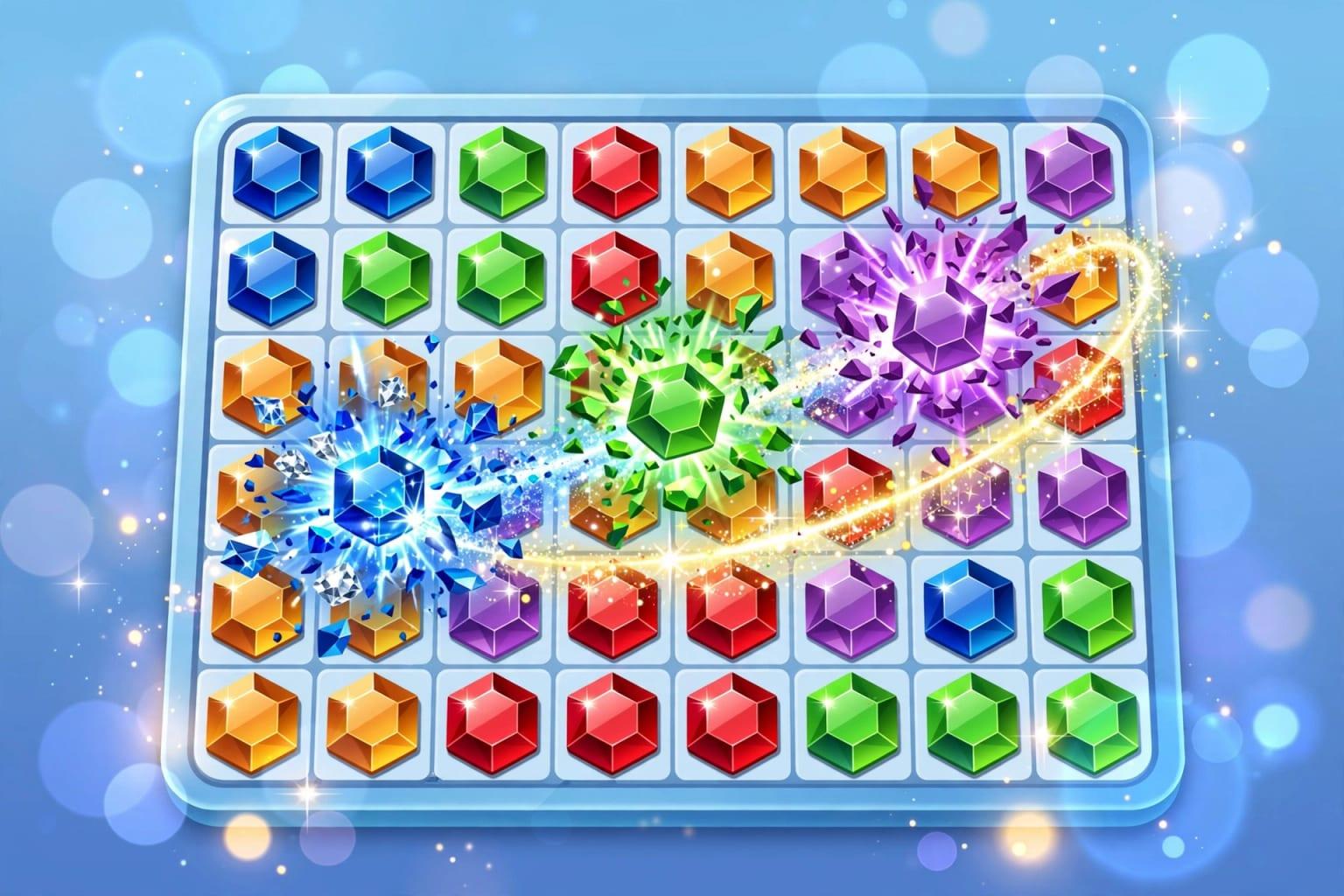
| Know the products | Match-3 | The pieces are your products or flavors | Match-3 |
| Learn something about the service | A short quiz | Five questions about the product or the occasion | Kids quiz |
| Challenge their friends | Catching or dodging for a high score | What falls is your product; what is dodged is its opposite | Your own description |
| See the product itself | A 3D showroom | The product on a stage the visitor orbits | Product showroom |
Pick the one that sounds like you to see the advice.
A catching game: catch the ingredients of your signature dish, avoid what does not belong. Thirty-second rounds and a QR code on the table.
A match-3 with your products as pieces, embedded in the seasonal offer page, with the discount code shown on winning.
A playful five-question quiz about the service, or an endless runner with the app's mascot.
A showroom or a 3D tour is more useful than a game: a 3D showroom for your products.
How do I design it so the brand is in the play, not on top of it?
The worst branded games are an ordinary game with a logo in the corner. The best would have nothing left if you removed the brand: the product is what you collect, the colors are its colors.
Which Gulf seasons suit a game?
Seasons give a short-lived game a reason and a fixed window. Starting ideas:
| Season | Game idea | Note |
|---|---|---|
| Ramadan | Collecting lanterns in a calm night, or a daily three-question quiz | A calm mood, evening play, no pressing timer |
| Eid | Matching Eid sweets, or collecting Eidiya gifts | Joyful colors, a greeting on the end screen |
| Saudi National Day and Founding Day | A run through illustrated landmarks, or a quiz on the occasion's history | Check the rules for using official emblems and identity |
| Eid Al Etihad in the UAE | A quiz on the seven emirates, or a calm walk through an illustrated scene | The same care applies to national symbols |
| White Friday and sale seasons | Catching products in a shopping cart for thirty seconds | The discount code on the end screen |
| Back to school | A quick quiz, or a maze to collect supplies | For children with parents |
| An event or exhibition | A one-round game on a tablet at the stand | The day's top score goes on a board |
Campaign planning: National Day and Founding Day campaigns, the Saudi Ramadan store checklist and Eid Al Etihad and White Friday campaigns.
How do I build it in days, not months?
A game studio or an agency suits large campaigns with large budgets. For a small or medium campaign you can build the game yourself by describing it in Fanann: write what you want, play it minutes later, tune it while it runs.
Make an upright phone game called Roastery Challenge: I drag a coffee cup left and right to catch falling coffee beans and avoid water drops. A normal bean is one point and a golden bean five points; three drops end the round. A round lasts forty-five seconds at most and the pace rises gradually. Colors: dark brown, cream and gold. The game starts with a single tap and no menus. The end screen shows my score in large type, the line Show your score at the counter, and a Play again button.
Try it in Fanann- 1Day 1: first version
Add nothing until the first thirty seconds are fun.
- 2Day 2: identity
Upload the logo and product pictures; set the colors.
- 3Day 3: tuning
Speed, lives and round length with sliders. Make it easier than you think.
- 4Day 4: playtest
Five outsiders, on their own phones, with no explanation.
- 5Day 5: publish
The game link, the embed code on the campaign page, and the card image for posts.
How do I distribute it so people reach it?
No install is your strongest distribution advantage. A two-week plan:
- 3 days beforeClosed test
Staff and friends play. Fix what keeps coming up.
- Day 1Launch
A post with a five-second clip of play, the link and a score to beat.
- Days 2-5WhatsApp and the shop
The link to customers who agreed to messages, and a QR code on tables, receipts and bags.
- Days 6-10A challenge
Post the top scores players send and invite people to beat them.
- Days 11-14Close
A last reminder, then thanks to participants.
- Embed it in a page you own, with the offer and button beside it. See Arabic landing pages that convert and browser games.
- A link per channel, through the link tool you already use.
- WhatsApp with permission: send only to those who agreed. See WhatsApp marketing done right.
What do I measure, and how do I measure it honestly?
Do not rely on the game alone to report on the campaign. Plan measurement with tools you control, before launch:
| What you want to know | How you find out | What it does not tell you |
|---|---|---|
| How many people arrived | Visits to the campaign page where you embedded the game, from your site analytics | Whether they enjoyed it |
| Where they came from | A different link per channel through your link tool | Who shared the link by hand |
| Whether they became buyers | A campaign-only discount code counted in your store or till | Who bought without the code |
| Whether they shared it | The score screenshots sent to you and mentions of your account | Private shares |
| Whether they liked it | Five players you watch directly, and one question after play | The view of those who did not play |
Compare with a similar earlier campaign without a game. One number with nothing beside it says nothing. Basics: analytics for your app and conversion rate.
What are the limits and the common mistakes?
- Kind of game
- A light, single-player browser game
- Not included
- Multiplayer, or publishing to stores or consoles
- Best score
- In the runner template it is kept on the player's device, so challenges run on screenshots
- Performance
- Depends on the player's phone; test on a mid-range device
- Publishing
- How many games are live at once depends on your plan
- A complicated game: cut three levels and a story to one excellent round.
- A form before play: asking for a name and number first drives away most of the curious.
- High difficulty: someone who loses within five seconds twice will not try a third time.
- No next step: a fun game that ends with no offer and no link.
A good branded game never says buy. It makes the player smile with your name in front of them.
Build steps: make a 2D game with AI. Plans: pricing.
Key takeaways
- A game buys time and attention, not direct sales. Set one goal before you start.
- The simplest mechanic wins: if the game needs explaining, you have lost half of those who opened it.
- Put the brand inside the play: the product is what gets collected, the mascot is the hero.
- Plan measurement outside the game: a page you own, a discount code, a link per channel.
- No promised results. Try it on a small campaign, measure, then decide.
Frequently asked questions
How do I make a marketing game for my shop?
Do mini-games increase sales?
How long does it take to prepare a game for a campaign?
Can I put my logo and products in the game?
Does the game collect customer data?
Does a game work at an event or exhibition?
Ask your AI assistant about this
Copy this prompt into the AI assistant you use, then add the details of your own case.
I am reading this guide: “Branded mini-games for marketing: campaigns people actually play” https://fanann.com/en/blog/branded-games-for-marketing/ My question: branded mini games for marketing Use that page as a source and explain the answer step by step for my situation, tell me what to check before I start, and cite the page link.